In this post
When homeowners think about roofing, they often focus on the visible surface. But true durability comes from understanding the essential roofing system components that work together to protect your home.
In Oklahoma’s storm-prone climate, every layer matters. From waterproofing membranes to ventilation and flashing details, each element plays a role in long-term performance.
Below are the seven key roofing system components that define a high-performance residential roof.
How Roofing System Components Work Together
1. Structural Roof Decking
The roof deck is the foundation of the entire system. Typically made of plywood or oriented strand board (OSB), the decking supports every other layer above it.
If decking is compromised by moisture or age, the rest of the roofing system components cannot perform properly. During a roof replacement, inspecting and replacing damaged decking is critical to long-term durability.
2. Underlayment: The Secondary Waterproof Layer
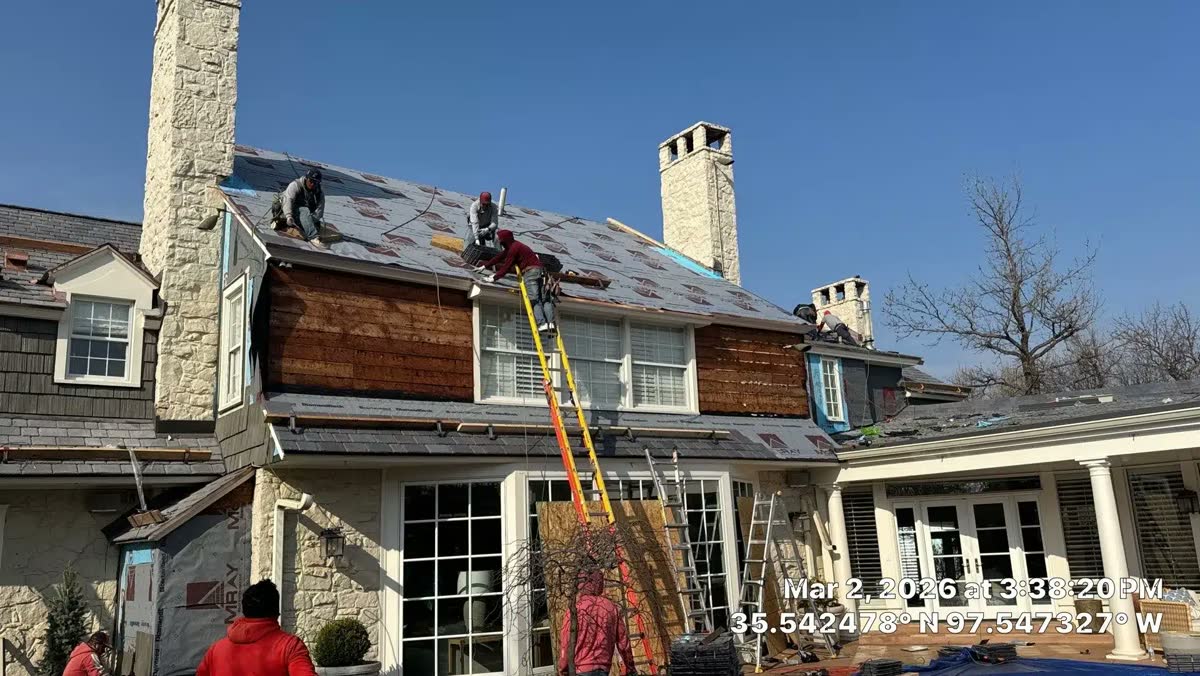
Underlayment sits directly on top of the decking and acts as a protective barrier beneath the outer roofing material.
Modern synthetic underlayments offer improved tear resistance and moisture protection compared to traditional felt. While shingles or tile provide primary protection, underlayment ensures redundancy within the roofing system components.
3. Ice and Water Barrier Protection
An important upgrade in many systems is an ice and water barrier on roof surfaces. This self-adhering membrane is installed in vulnerable areas such as:
- Eaves
- Valleys
- Around penetrations
- Near chimneys
An ice and water barrier on roof edges helps prevent water infiltration from wind-driven rain or ice dams. In climates like Oklahoma, where severe storms are common, this layer adds meaningful protection. Including this membrane strengthens the overall waterproofing performance of the roofing system.
4. Proper Drip Edge Installation
Drip edge is often overlooked but plays an essential role in directing water away from fascia boards and into the gutters.
There are different types of drip edge for roofing, including:
- L-style (Type C)
- T-style (Type D)
- F-style (gutter apron)
Understanding the types of drip edge for roofing helps ensure the correct profile is selected for your gutter system and roof design.
Drip edge protects roof edges from rot, improves water runoff, and enhances the integrity of surrounding roofing system components.
5. Flashing: Protecting Roof Transitions
Flashing is one of the most critical elements in preventing leaks. Areas where roof planes meet vertical surfaces — such as chimneys and walls — require precision installation. Ensuring proper chimney flashing prevents water intrusion at one of the most vulnerable roof intersections.
High-quality proper chimney flashing typically includes:
- Step flashing
- Counter flashing
- Sealant integration
- Secure fastening
Without proper chimney flashing, even premium roofing materials can fail prematurely.
6. Ventilation System
Ventilation is one of the most important but misunderstood roofing system components.
A balanced system includes:
- Intake vents at soffits
- Exhaust vents at the ridge
- Adequate airflow through the attic
Proper ventilation regulates temperature and moisture, preventing premature aging of shingles and decking. Without ventilation, heat and humidity build up beneath the roof — reducing efficiency and lifespan.
7. Primary Roofing Material
The outermost layer is what most homeowners see: asphalt shingles, metal panels, tile, or composite systems. While material choice matters, performance depends on how well it integrates with the other roofing system components beneath it.
Premium shingles, metal systems, and tile all require:
- Secure fastening
- Proper alignment
- Seam integrity
- Correct flashing integration
Even the best materials cannot compensate for poorly installed supporting layers.
Understanding the Structure Behind a Durable Roof
A high-performance roof functions as a layered defense system:
- Decking provides structure
- Underlayment adds secondary protection
- Ice and water barrier on roof edges protects against infiltration
- Drip edge directs water away
- Proper chimney flashing seals vulnerable transitions
- Ventilation regulates temperature and moisture
- The outer roofing material sheds water and enhances appearance
When each of these roofing system components is installed correctly, the system performs as designed, protecting your home for decades.
Give Your Property a Roof That Stands Out and Endures with McRay Roofing & Exteriors
A durable roof starts with thoughtful planning and expert installation. At McRay Roofing & Exteriors, we help homeowners across Oklahoma build roofing systems designed to stand up to heat, hail, and high winds.
From ice and water protection to precise flashing and ventilation, every detail is installed with purpose. We believe your roof should look exceptional — and perform that way for years to come. If you’re planning a roof replacement and want it done right, let’s talk.