In this post
- The Myth: Metal Roofs Make Homes Hotter
- How Metal Roofing Actually Handles Heat
- Ventilation Matters More Than Material
- Is a Black Metal Roof a Bad Idea?
- Comparing Metal to Asphalt Shingles
- The Role of Insulation and Underlayment
- What About Standing Seam Metal Roofs?
- Long-Term Energy Efficiency Benefits
- The Real Answer: Does a Metal Roof Make Your House Hotter?
- Work with a Roofing Expert Who Understands Performance
One of the most common concerns homeowners raise when considering metal roofing is temperature. You may have heard conflicting opinions — some claiming metal traps heat, others insisting it improves efficiency. The question often sounds like this: does a metal roof make your house hotter? It’s a fair concern, especially in Oklahoma where summer heat is intense. But the answer depends on science, not assumption.
In this guide, we’ll separate myth from reality, explain how metal roofing interacts with heat, and address related concerns like is a black metal roof a bad idea and whether metal roofs make houses hotter is even the right question to ask.
The Myth: Metal Roofs Make Homes Hotter
Many homeowners assume that because metal heats up quickly in the sun, it must transfer that heat into the attic and living space below. The truth is more nuanced.
Yes, metal surfaces warm under direct sunlight. But what matters most is not how hot the surface becomes, it’s how the roofing system manages heat transfer.
A properly installed metal roof does not automatically mean higher indoor temperatures.
How Metal Roofing Actually Handles Heat
Metal roofing performs differently than traditional asphalt shingles. Instead of absorbing and retaining heat, many modern metal systems are designed to reflect solar radiation.
High-quality metal panels often feature reflective coatings with high Solar Reflectance Index (SRI) ratings. These coatings reduce the amount of heat absorbed into the structure.
This is why the question “does a metal roof make a house hotter?” often leads to a surprising answer: in many cases, metal roofs can help reduce heat gain compared to darker asphalt shingles.
Heat management depends on:
- Reflective coatings
- Proper underlayment
- Adequate attic insulation
- Balanced ventilation
Without proper ventilation, any roofing material can contribute to attic heat buildup.
Ventilation Matters More Than Material
When homeowners ask, does a metal roof make your house hotter, the conversation should also include attic design.
A well-ventilated attic allows hot air to escape through ridge vents while cooler air enters through soffits. This airflow prevents trapped heat from transferring downward into living spaces.
In fact, a poorly ventilated attic with asphalt shingles can create more heat retention than a properly ventilated metal roof.
If attic insulation and ventilation are correctly designed, metal roofing does not inherently cause overheating.
Is a Black Metal Roof a Bad Idea?
Color is another common concern. Homeowners frequently wonder if a black metal roof is a bad idea in a hot climate.
Darker colors absorb more solar radiation than lighter colors. That’s simple physics. However, modern coating technology changes the equation.
Many black metal roofing systems use “cool roof” pigments engineered to reflect infrared radiation, even if the surface appears dark to the eye.
So, is a black metal roof a bad idea? Not necessarily.
The real factors to consider are:
- Coating technology
- Reflectivity rating
- Insulation beneath the roof
- Ventilation performance
With proper system design, even darker metal roofs can perform efficiently.
Comparing Metal to Asphalt Shingles
Let’s look at performance side by side.
Asphalt shingles:
- Absorb and retain heat
- Release heat slowly after sunset
- Often lack reflective coatings
Metal roofing:
- Heats quickly but cools quickly
- Reflects more solar radiation (with proper coatings)
- Transfers less retained heat into attic space
When evaluating whether a metal roof makes a house hotter, it’s important to understand that asphalt often holds heat longer into the evening.
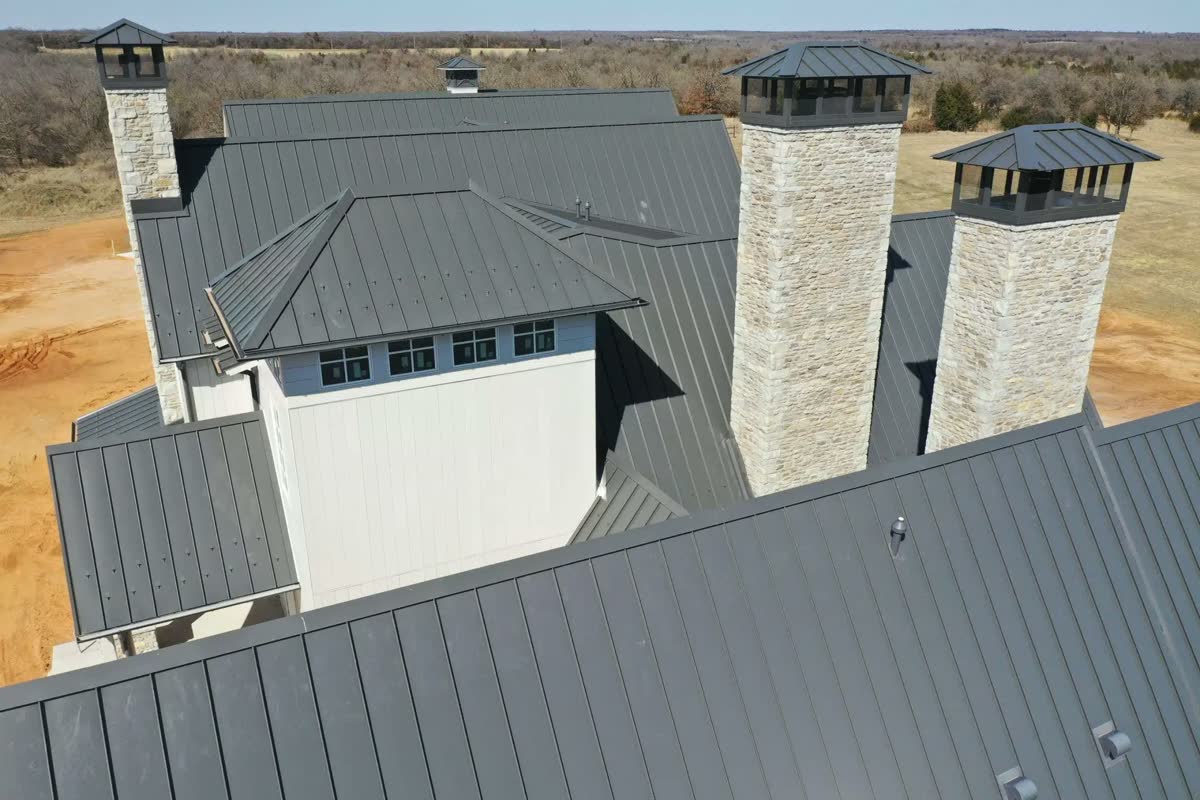
Metal systems, especially standing seam panels with reflective finishes, frequently outperform traditional shingles in thermal efficiency.
The Role of Insulation and Underlayment
Roofing material is only one layer in a complete roofing system.
High-quality underlayment, radiant barriers, and attic insulation all influence temperature control. Even the best roof material will underperform if insulation is inadequate.
A roofing system should be evaluated as a whole:
- Roof covering
- Decking
- Underlayment
- Insulation
- Ventilation
When these components work together, metal roofing can actually contribute to improved energy efficiency.
What About Standing Seam Metal Roofs?
Standing seam systems are especially effective at thermal performance. Their raised seams create slight air channels that allow for minor airflow beneath panels.
In hot climates, this subtle ventilation effect can reduce heat transfer compared to tightly layered asphalt shingles.
For homeowners concerned that metal roofs make houses hotter, standing seam systems often provide both aesthetic appeal and performance advantages.
Long-Term Energy Efficiency Benefits
Over time, energy savings can offset part of the initial investment in metal roofing.
Potential benefits include:
- Reduced cooling load
- Lower attic temperatures
- Longer HVAC lifespan
- Improved indoor comfort
When properly installed, metal roofs do not trap heat in the way many assume. Modern coatings and installation methods have significantly improved performance.
The Real Answer: Does a Metal Roof Make Your House Hotter?
Let’s answer it directly.
No, a properly designed and installed metal roofing system does not inherently make your home hotter.
In many cases, especially when reflective coatings and ventilation are optimized, metal roofs can perform as well as or better than traditional shingles in hot climates. The better question is whether the roofing system is engineered correctly.
Work with a Roofing Expert Who Understands Performance
How a roof handles heat isn’t just about the material you choose. It comes down to how the system is designed, how ventilation is balanced, and how carefully every detail is installed. Performance is built layer by layer, and that requires experience.
At McRay Roofing & Exteriors, we take the time to evaluate your home, explain your options clearly, and design a roofing solution that fits both your structure and your long-term goals.
If you’re considering metal roofing and want straightforward, knowledgeable guidance from a team that understands how these systems truly perform, we’re here to help. Let’s talk through your options and build something that protects your home with confidence.