In this post
- What Is a Low Pitch Roof?
- Why Low Pitch Roofs Are More Vulnerable to Leaks
- Best Flat Roof Roofing Material Options
- Materials to Avoid on Low Slopes
- Installation Techniques That Prevent Leaks
- Energy Efficiency Considerations
- Long-Term Performance and Maintenance
- Work with a Roofing Partner Who Understands Low Slope Systems
Low slope rooflines offer a clean architectural appearance and are often used in modern custom homes, additions, and transitional designs. However, when it comes to roofing a low pitch roof, the margin for error becomes much smaller than with traditional steep-slope systems.
Water drains more slowly on shallow slopes. That single factor changes everything — from material selection to seam design to drainage planning. Understanding what is a low pitch roof and selecting the right flat roof roofing material are essential steps in preventing leaks and protecting long-term property value.
This guide explains how low pitch roofs function, which materials perform best, and what installation techniques ensure lasting durability.
What Is a Low Pitch Roof?
A low pitch roof typically has a slope between 2:12 and 4:12. That means the roof rises only a few inches for every foot of horizontal run. In some cases, slopes are even shallower and approach what many consider flat.
When homeowners ask what qualifies as a low slope, they’re often comparing it to traditional roofs that shed water quickly. On a low pitch system, water moves more gradually. Instead of relying purely on gravity, the system must rely on watertight construction.
That’s why roofing decisions on these structures require more technical precision than many homeowners expect.
Why Low Pitch Roofs Are More Vulnerable to Leaks
The biggest challenge in roofing a low pitch roof is water management.
On shallow slopes:
- Rainwater lingers longer
- Debris accumulates more easily
- Wind-driven rain can push upward under seams
- Minor installation errors become major leak sources
Steep roofs shed water quickly. Low pitch roofs must resist water penetration entirely. That difference makes selecting the correct flat roof roofing material critical.
Best Flat Roof Roofing Material Options
Not all systems are suitable for shallow slopes. The best flat roof roofing material must create a continuous, waterproof barrier rather than simply overlapping shingles.
Here are the most reliable options.
1. Modified Bitumen
Modified bitumen is a multi-layer membrane system engineered for low-slope performance.
Why it works well for roofing a low pitch roof:
- Heat-welded seams create strong waterproof bonds
- Multiple layers increase durability
- Flexible design handles temperature changes
This material has a long track record of dependable leak resistance in both residential and commercial settings.
2. TPO (Thermoplastic Polyolefin)
TPO membranes are increasingly popular for low-slope residential applications.
Benefits include:
- Heat-welded seams
- UV resistance
- Reflective surface to reduce heat gain
When installed properly, TPO performs exceptionally well in environments where standing water may occasionally occur. As a flat roof roofing material, it balances durability with energy efficiency.
3. PVC Membranes
PVC is often considered a premium membrane option.
It offers:
- Strong seam integrity
- Resistance to ponding water
- Long service life
For homeowners evaluating what is a low pitch roof on their property, PVC provides a durable solution designed to withstand moisture exposure over time.
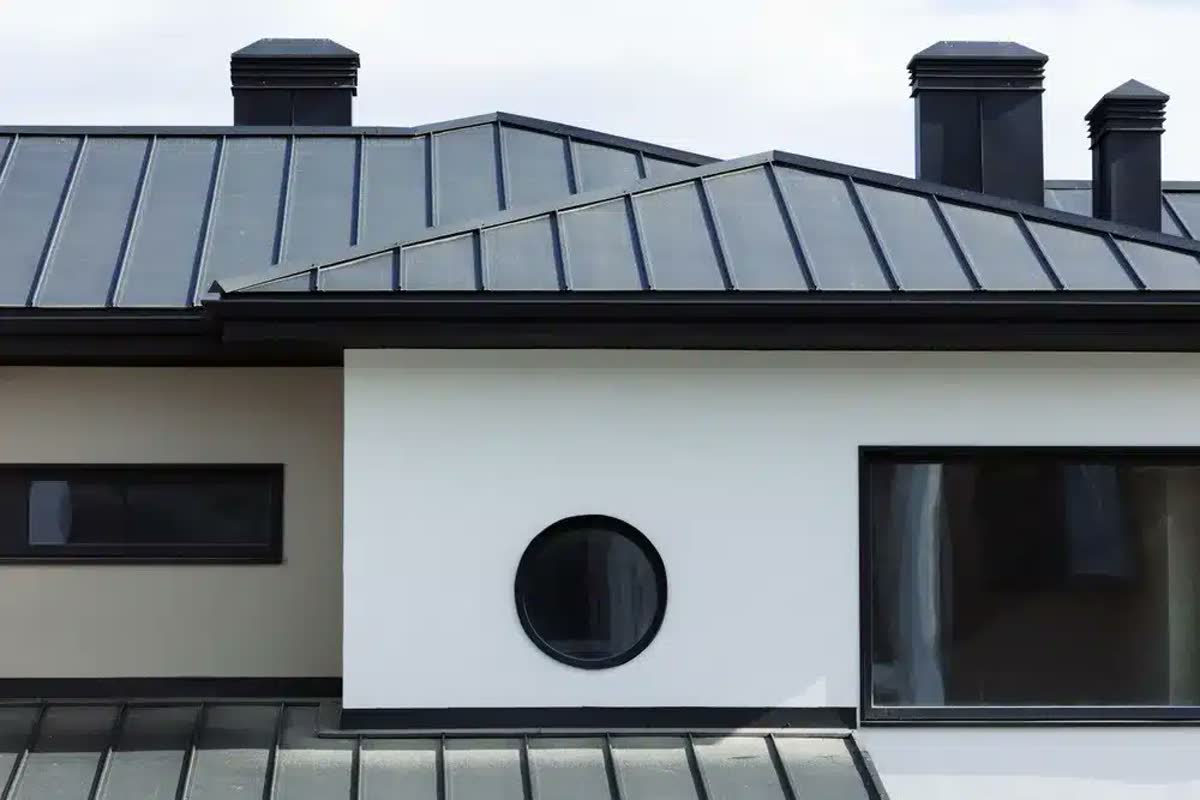
4. Standing Seam Metal (Engineered for Low Slopes)
Standing seam systems can be adapted for certain low-slope applications when properly designed.
Because seams are elevated and fasteners are concealed, standing seam metal offers improved water resistance compared to exposed fastener panels. However, roofing a low pitch roof with metal requires careful underlayment selection and precise detailing.
Improper installation can compromise performance, which is why experience matters.
Materials to Avoid on Low Slopes
Standard asphalt shingles are typically not recommended below manufacturer slope guidelines. While excellent for steep applications, they are not engineered as a primary flat roof roofing material for slow-draining surfaces.
Using inappropriate materials is one of the most common causes of leaks on shallow roofs.
Installation Techniques That Prevent Leaks
Material selection alone does not guarantee performance. Craftsmanship is equally important.
Seam Integrity
Low slope roofs depend heavily on seam quality. Heat-welded seams or fully adhered membranes significantly reduce the risk of water infiltration.
Even small seam defects can allow water entry when drainage is slow.
Waterproof Underlayment
A secondary waterproof layer provides added protection beneath the primary surface. In Oklahoma’s storm-prone climate, this extra safeguard is particularly valuable.
Proper layering creates redundancy, which is essential when roofing a low pitch roof.
Drainage Engineering
Understanding what is a low pitch roof means recognizing that drainage must be intentionally designed.
Effective solutions may include:
- Tapered insulation systems
- Internal drains
- Scuppers
- Carefully angled flashing
Water should always have a clear path off the roof surface.
Flashing Precision
Penetrations such as skylights, vents, and chimneys require meticulous sealing. On shallow slopes, flashing errors are amplified because water does not move away quickly.
Professional detailing ensures transitions remain watertight over time.
Energy Efficiency Considerations
Many modern flat roof roofing material systems include reflective surfaces that reduce heat absorption.
Benefits can include:
- Lower attic temperatures
- Reduced cooling costs
- Extended membrane lifespan
For Oklahoma homeowners, energy efficiency can enhance the overall value of the roofing system.
Long-Term Performance and Maintenance
When properly installed, systems designed for roofing a low pitch roof can provide decades of reliable protection.
However, maintenance is essential. Recommended practices include:
- Removing debris from drains
- Inspecting seams and flashing
- Monitoring for ponding water
Routine inspections help preserve system integrity and prevent small issues from becoming costly repairs.
Work with a Roofing Partner Who Understands Low Slope Systems
For over 15 years, McRay Roofing & Exteriors has provided Oklahoma homeowners with carefully engineered roofing solutions tailored to their property’s structure and slope. As a family-owned company built on transparency and precision craftsmanship, we approach every project with a detailed assessment and clear communication .
If you want expert guidance on selecting the right flat roof roofing material, connect with our team today for a professional consultation.