In this post
- Spanish Tile Is a Style, Not One Material
- What Is a Spanish Barrel Tile Roof?
- S-Shaped Spanish Tile
- Low-Profile and Flat Tile Options
- Clay Spanish Roof Tiles
- Concrete Spanish Roof Tiles
- Lightweight Composite Spanish Tile
- Choosing the Right Color
- Structural Weight and Roof Design
- Installation Is About the Entire Assembly
- Repairability and Future Availability
- Questions to Ask Before Selecting Spanish Roof Tiles
- Find the Right Spanish Tile System
Spanish roof tiles are known for their curved shapes, warm colors, and strong architectural presence. They can make a new home feel established or help preserve the character of a Mediterranean, Mission, Spanish Revival, or Southwestern property.
However, the phrase “Spanish roof tile” can refer to several different products.
Some tiles are made from natural clay. Others are concrete or composite. Some have a two-piece barrel design, while others use a single S-shaped profile to create a similar pattern.
Understanding the difference between a tile’s material and its profile makes it much easier to compare the available options.
Spanish Tile Is a Style, Not One Material
Homeowners often use “Spanish tile,” “clay tile,” and “barrel tile” as though they mean the same thing. They are related, but they describe different characteristics.
Spanish tile generally refers to the roof’s visual style.
Clay tile identifies the material used to make the tile.
Barrel tile describes a rounded roof profile.
A barrel-shaped tile can be made from clay, concrete, or another material. Likewise, clay tiles can be produced in barrel, S-shaped, flat, or other profiles.
Separating these terms helps homeowners choose a roof based on more than appearance.
What Is a Spanish Barrel Tile Roof?
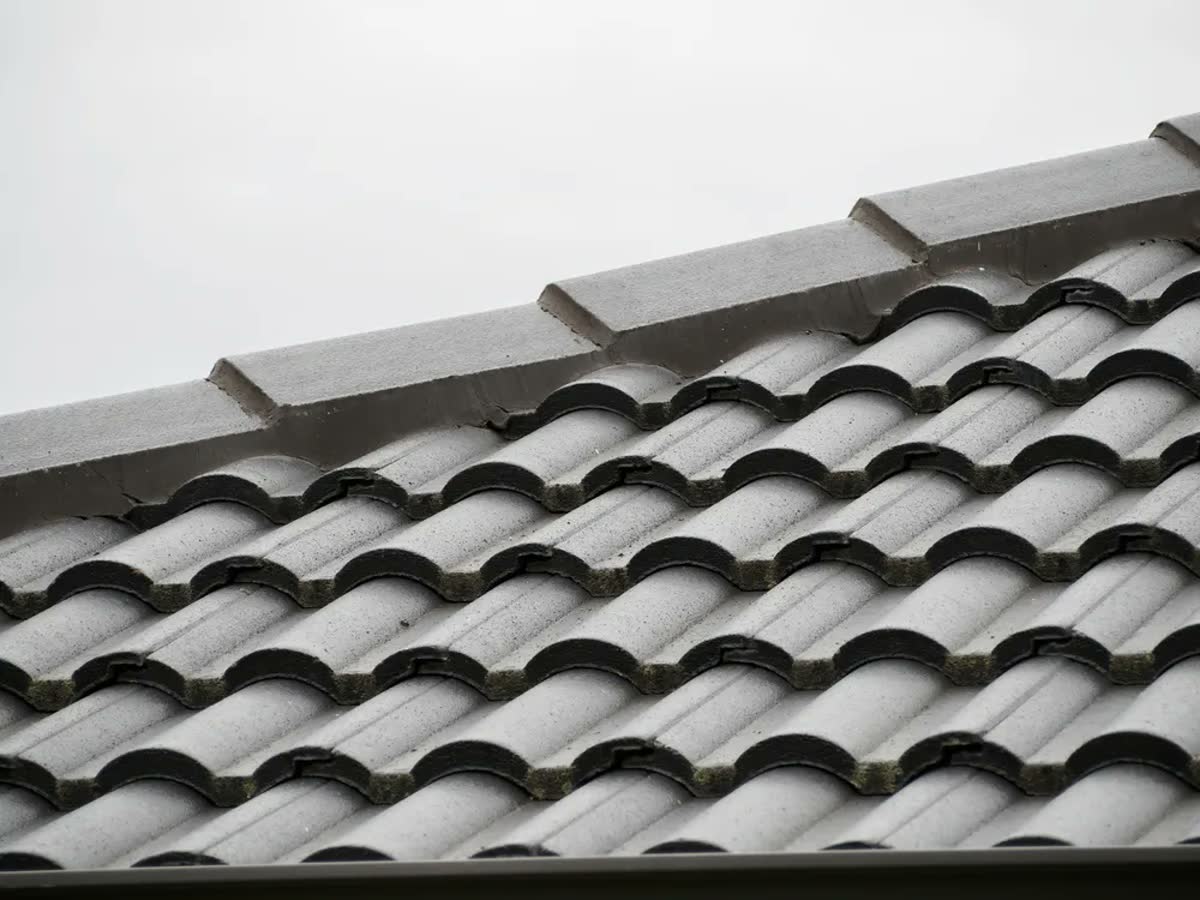
Traditional barrel roofs use curved tiles to create alternating channels and raised caps.
In a classic two-piece system, one tile forms a lower channel that carries water down the roof. A second curved tile covers the joint between the lower tiles. Together, the pieces create the deep rolling pattern associated with historic Spanish and Mediterranean roofs.
Barrel tile creates:
- Pronounced shadows
- Strong texture
- Deep roof lines
- A handcrafted appearance
- Visible variation between individual tiles
This profile is often a strong match for stucco walls, arched openings, stone details, exposed beams, courtyards, and other Old-World architectural features.
Because the profile is pronounced, barrel tile can overwhelm a home with a small roof area or very simple exterior. The entire elevation should be considered before selecting it.
S-Shaped Spanish Tile
An S-shaped tile combines the channel and cover shape into one piece. Once installed, rows of S tiles create a flowing pattern similar to a traditional barrel roof.
S-shaped tiles may offer a more uniform appearance and can simplify portions of the installation. They are available in clay and concrete, with different depths and widths depending on the manufacturer.
A deep S profile creates stronger shadows and a more traditional look. A lower profile feels more restrained and may work better on transitional homes.
Low-Profile and Flat Tile Options
Not every Spanish-influenced roof needs a deep wave.
Low-profile tiles offer gentle curves with less visual weight. Flat tiles can reproduce the look of slate, wood shake, or traditional hand-formed materials while still being part of a clay or concrete tile system.
These options may suit homes that combine Mediterranean details with contemporary lines.
The key is to match the roof profile to the scale of the home. A large property with tall walls may support a bold barrel pattern, while a smaller home may look more balanced with a shallower tile.
Clay Spanish Roof Tiles
Clay tiles are formed from natural clay and fired at high temperatures. Their color can come from the clay itself, added minerals, surface treatments, or glazing.
Homeowners often choose clay for its:
- Natural color variation
- Traditional texture
- Strong architectural character
- Resistance to surface peeling
- Compatibility with historic styles
Clay can also be brittle. Individual tiles may crack from impact, incorrect foot traffic, or careless handling.
For a closer look at the material, visit our Spanish clay tile roofing guide.
Concrete Spanish Roof Tiles
Concrete tile is molded from a cement-based mixture and can be produced in barrel, S-shaped, flat, or shake-like profiles.
It often provides more color and style options at a lower initial material cost than premium clay. Concrete can also reproduce the appearance of clay surprisingly well.
However, concrete tile is typically heavier. Surface color may also weather differently than kiln-fired clay.
Structural capacity, coating type, local climate, and long-term maintenance should be considered before choosing concrete solely because of its initial price.
Lightweight Composite Spanish Tile
Composite products are made to reproduce the appearance of clay or concrete while weighing less.
They may be useful for homes where traditional tile would require substantial structural work. Composite tiles may also offer different impact ratings, installation methods, and warranties.
Not all composite products are equivalent. Homeowners should review:
- Product testing
- Fire classification
- Impact classification
- Wind-related documentation
- Fade coverage
- Installation requirements
- Warranty exclusions
The best lightweight option is one supported by clear manufacturer documentation and installed according to its approved system.
Choosing the Right Color
Terracotta remains the most recognizable Spanish tile color, but it is far from the only choice.
Available palettes may include:
- Burnt orange
- Deep red
- Sand
- Buff
- Brown
- Charcoal
- Weathered blends
- Multicolor combinations
The roof should relate to the home’s permanent exterior materials. Brick, stone, stucco, masonry, and fixed metal finishes matter more than easily changed items such as paint or landscaping.
Viewing full-size samples outdoors is especially important. Sunlight can make a tile look much lighter or warmer than it appeared indoors.
Blended tiles should also be viewed across a larger display. One tile cannot show how the finished roof will look once the colors are distributed.
Structural Weight and Roof Design
Clay and concrete tile systems are heavier than asphalt shingles. Before installation, the contractor should evaluate the framing, decking, roof slope, and existing materials.
The roof design also affects the tile choice.
Valleys, dormers, walls, chimneys, skylights, low-slope transitions, and complex hips require careful detailing. Some tile profiles are easier to adapt to complicated roof geometry than others.
The goal is not simply to find a tile that fits physically. It must also allow the roof to drain and be flashed correctly.
Installation Is About the Entire Assembly
Tile is the visible part of the roof, but performance depends on several connected components:
- Roof deck
- Underlayment
- Battens, when used
- Fasteners or approved attachment systems
- Valley construction
- Wall and chimney flashing
- Eave and rake details
- Ridge and hip installation
- Ventilation
- Drainage
A lower-priced bid may omit important details that will be hidden once the tile is installed. Homeowners should compare the full installation scope rather than comparing tile samples alone.
Repairability and Future Availability
Before selecting a tile, ask whether replacements are likely to remain available.
Roof tile profiles sometimes change or leave production. When an exact replacement cannot be found, repairs may require salvaged tiles, custom solutions, or larger-area replacement.
Keeping several unused tiles from the original installation can make future repairs easier. The extra tiles should be stored in a protected location and labeled with the product name, color, and profile.
Questions to Ask Before Selecting Spanish Roof Tiles
Before making a final decision, ask the roofing contractor:
- Can the existing structure support this product?
- Is the profile suitable for the roof slope?
- What underlayment system will be installed?
- How will valleys and wall transitions be built?
- What attachment method will be used?
- Is the product appropriate for Oklahoma weather?
- Are replacement tiles readily available?
- What parts of the system are covered by warranties?
- Who will inspect the finished installation?
- How should the roof be maintained after storms?
Clear answers to these questions are more valuable than choosing a roof based on color alone.
Find the Right Spanish Tile System
McRay Roofing & Exteriors helps homeowners compare Spanish tile profiles, materials, structural requirements, and installation details.
Whether the home calls for traditional clay barrel tile, an S-shaped concrete profile, or a lightweight alternative, the selection should support both the architecture and the roof’s long-term performance.