In this post
- Clay and Concrete at a Glance
- Appearance and Architectural Character
- Color and Weathering
- Weight and Structural Requirements
- Moisture and Temperature Changes
- Hail, Wind, and Impact
- Installation Differences
- Maintenance and Repairs
- Cost: Initial Price vs. Complete Project Cost
- Choose Clay When…
- Choose Concrete When…
- What About Lightweight Composite Tile?
- Compare Tile Options With a Roof Assessment
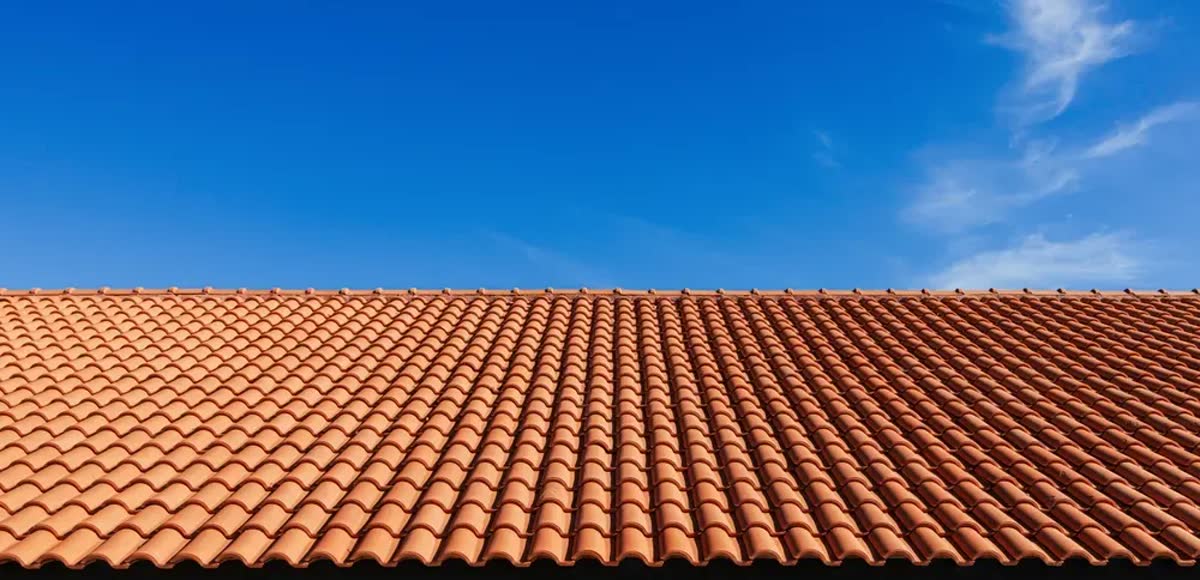
Clay and concrete roof tiles can look remarkably similar from the street. Both are available in barrel, S-shaped, flat, and low-profile designs. Both can create a premium roof with strong texture and architectural appeal.
Underneath that appearance, however, they are different materials.
Clay is fired from natural earth-based material. Concrete is molded from a cement, sand, and water mixture. That difference affects weight, color, moisture behavior, maintenance, price, and repair options.
There is no universal winner. The better material is the one that fits the home’s structure, design, location, and budget.
Clay and Concrete at a Glance
|
Consideration |
Clay Tile |
Concrete Tile |
|---|---|---|
|
Material |
Fired natural clay |
Molded cement-based mixture |
|
Weight |
Heavy |
Usually heavier |
|
Appearance |
Natural variation and traditional character |
Broad range of colors and molded styles |
|
Color |
Often integral, kiln-fired, or glazed |
Often integral or applied as a surface finish |
|
Initial cost |
Commonly higher |
Commonly more budget-friendly |
|
Maintenance |
Relatively low with proper installation |
May require more attention to surface weathering |
|
Impact risk |
Can crack from impact or foot traffic |
Can also crack from impact or foot traffic |
|
Structural review |
Required |
Especially important because of added weight |
|
Best fit |
Authenticity and long-term architectural character |
Flexibility, availability, and initial value |
Product specifications vary. Homeowners should compare the actual products being proposed rather than relying only on general material categories.
Appearance and Architectural Character
Clay is often chosen for its natural variation.
Traditional clay tiles may include subtle differences in color, texture, and shape. Those differences can create the layered, handcrafted appearance associated with historic Spanish and Mediterranean roofs.
Concrete tends to look more uniform, although modern manufacturing can create blended colors and textured surfaces. It can also reproduce slate, wood shake, and clay profiles.
Choose clay when natural variation is central to the design. Consider concrete when the project calls for a controlled color palette, broader style availability, or a more consistent finish.
Full-size samples should always be viewed outside. A small showroom sample may not reveal how the roof will look in direct sun or across a large surface.
Color and Weathering
Clay color may come from the clay body, minerals, glazing, or another fired finish. This can allow the color to age gradually without behaving like a conventional painted coating.
Concrete tile may use integral pigment, surface-applied color, protective coatings, or combinations of these methods. Depending on the product, the surface appearance may change more noticeably as it weathers.
That does not automatically make concrete unattractive. Some homeowners prefer a roof that develops a softer, aged appearance.
Ask each manufacturer:
- How is the tile colored?
- Is the finish integral or surface-applied?
- What appearance changes are considered normal?
- Is fading covered by the warranty?
- Are matching replacement tiles available?
These questions are more useful than assuming every clay or concrete product will age the same way.
Weight and Structural Requirements
Both materials are heavier than asphalt shingles.
Concrete is usually heavier than clay, making structural evaluation especially important. The framing, decking, roof slope, existing roof layers, and unsupported spans should be reviewed before materials are ordered.
Some homes can support either option without substantial work. Others may require reinforcement.
Do not assume that an older tile roof proves the structure can support a new one. The previous material, installation method, and load may differ from the proposed system.
The contractor should confirm what the home can safely carry.
Moisture and Temperature Changes
Clay and concrete react differently to moisture.
Concrete is generally more absorptive than fired clay. Coatings and product design can help manage this characteristic, but drainage and ventilation remain important.
Clay may absorb less moisture, depending on the product and finish. However, a clay tile that takes in moisture can be vulnerable when temperatures repeatedly move above and below freezing.
The product must be appropriate for the climate where it will be installed.
For either material, the underlayment, flashing, slope, and drainage details are essential. The tile is only one part of the roof assembly.
Hail, Wind, and Impact
Neither clay nor concrete tile is unbreakable.
Large hail, falling tree limbs, or concentrated foot traffic can crack either material. Some individual products have impact testing or classifications that may make them better suited to storm-prone areas.
Wind performance depends on more than tile weight. Attachment, roof location, slope, perimeter details, fasteners, clips, approved adhesives, and installation method all matter.
Homeowners in Oklahoma should ask for product-specific documentation rather than accepting a general claim that one material is “hail-proof” or “wind-proof.”
Installation Differences
Clay may require more sorting and blending because of natural variation. Some profiles also call for specialized cutting and layout.
Concrete tiles may be more consistent in size, but their additional weight can affect handling and installation speed.
Both systems require careful attention to:
- Underlayment
- Flashing
- Fastening
- Valleys
- Roof penetrations
- Ridges and hips
- Eaves and rakes
- Ventilation
- Safe roof access
The experience of the installer can matter more than a small difference between the materials.
Maintenance and Repairs
Both clay and concrete roofs should be inspected periodically and after major storms.
Typical repair needs include:
- Replacing broken tiles
- Correcting slipped pieces
- Clearing valleys
- Repairing flashing
- Addressing underlayment failures
- Replacing damaged ridge or hip tiles
Concrete may require additional attention when a coating or sealant begins to weather. Clay may become difficult to match when an older profile or color is no longer manufactured.
For either material, keep extra tiles from the original installation. Label them and store them where they will not be damaged.
Cost: Initial Price vs. Complete Project Cost
Concrete often has a lower initial material cost than premium clay. That can make it attractive for larger roof areas or projects with firm budgets.
Material price is only one part of the total, however.
The complete project may also include:
- Tear-off
- Disposal
- Structural reinforcement
- Deck replacement
- Premium underlayment
- Flashing
- Tile delivery and staging
- Specialty labor
- Crane or lifting equipment
- Complex ridge and valley work
A less expensive tile can still lead to a higher project total if the structure requires extensive reinforcement.
Compare complete proposals, not only the price per tile.
Choose Clay When…
Clay may be the stronger choice when:
- Authentic appearance is a priority.
- Natural color variation supports the architecture.
- The homeowner plans to keep the property long term.
- The structure can carry the selected tile.
- The budget supports a premium material.
- Compatible replacement tiles are available.
Choose Concrete When…
Concrete may be the stronger choice when:
- The homeowner wants more profile and color choices.
- The project needs a lower initial material cost.
- A consistent, manufactured appearance is preferred.
- The structure can support the additional weight.
- The selected product has suitable documentation for local conditions.
- Local product availability simplifies future repairs.
What About Lightweight Composite Tile?
When the structure cannot comfortably support clay or concrete, composite tile may provide another option.
Composite products can reproduce Spanish, shake, or slate profiles at a lower weight. Their performance, appearance, installation methods, and warranties vary widely.
They should be evaluated as a separate material category rather than assumed to perform exactly like clay or concrete.
Compare Tile Options With a Roof Assessment
The best choice cannot be made from a sample board alone.
McRay Roofing & Exteriors evaluates the roof structure, architecture, slope, deck condition, drainage details, and local exposure before recommending clay or concrete roof tiles.
That process helps homeowners compare the true project cost and choose a system that fits both the home and their long-term plans.